
Multiple Club Ownership: How It Is Changing Modern Sport
Explore multiple club ownership in sports: benefits like revenue growth, challenges including fan loyalty issues, and why organisations pursue this strategy.
By The Back5 team 5 min read
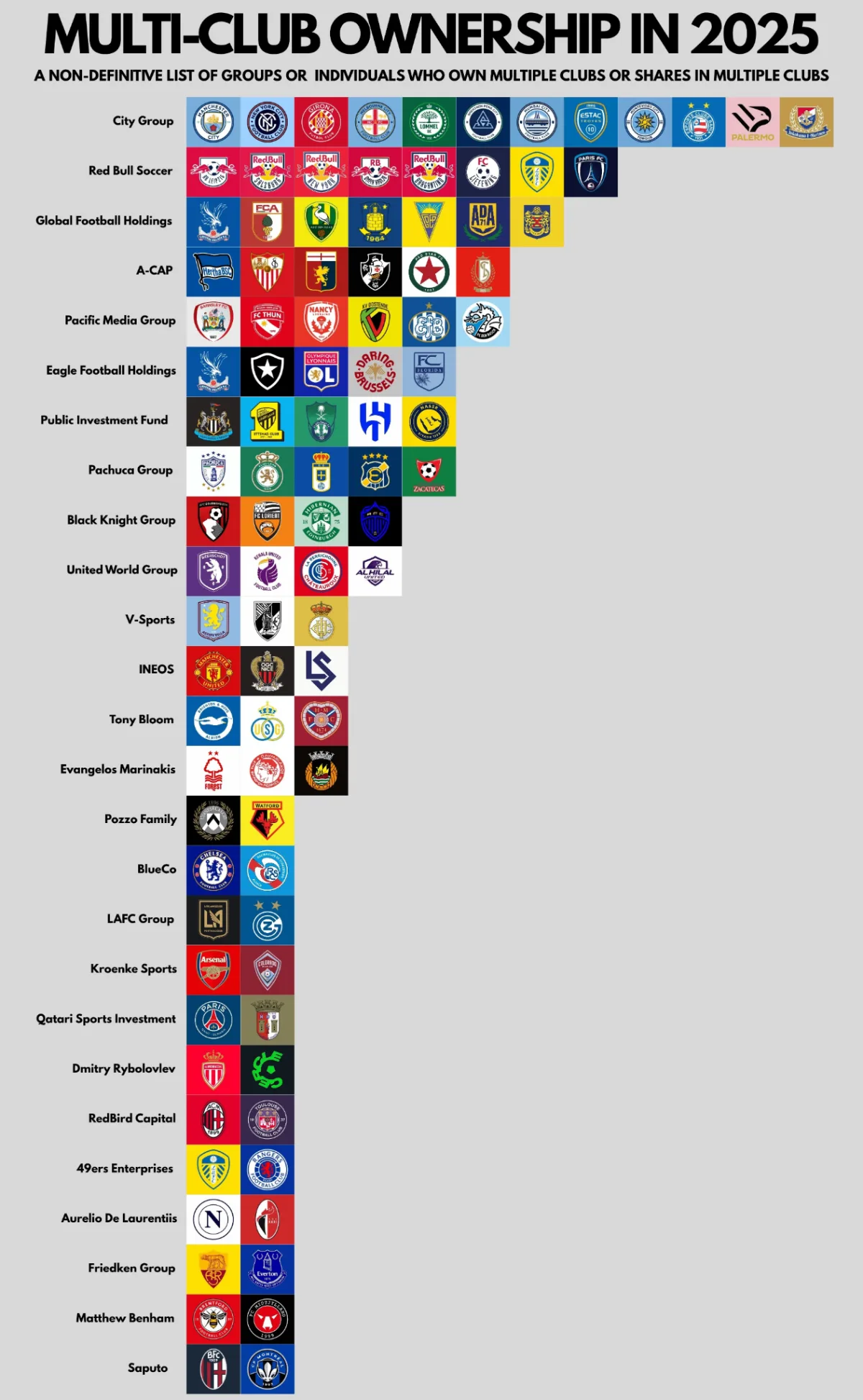
Multiple club ownership has become one of the most significant trends reshaping the global sports landscape. From Manchester City’s parent company owning clubs across continents to Red Bull’s football empire spanning multiple leagues, this business model is transforming how sports organisations operate and compete.
What Is Multiple Club Ownership?
Multiple club ownership refers to when a single entity, organisation, or ownership group controls two or more professional sports clubs. This model has gained particular prominence in football (soccer), where wealthy investors and corporations have built portfolios of clubs across different leagues and countries.
The practice ranges from direct ownership, where the same company owns multiple clubs outright, to more complex arrangements involving sister companies, partnerships, or shared investors maintaining controlling interests in various clubs.
The Compelling Advantages of Multiple Club Ownership
Revenue Diversification and Growth
Multiple club ownership creates diverse revenue streams across different markets, leagues, and geographical regions. When one club faces financial challenges or poor performance, others in the portfolio can offset these losses. This diversification is particularly valuable in sports, where success can be unpredictable and revenue often depends on on-field performance.
Enhanced Player Development Pathways
One of the most significant operational benefits is the creation of comprehensive player development networks. Organisations can move talented young players between clubs at different competitive levels, ensuring they receive appropriate playing time and development opportunities. This system maximises player potential whilst protecting valuable assets.
Shared Resources and Expertise
Multiple club ownership enables organisations to share crucial resources including coaching expertise, medical staff, training methodologies, and administrative functions. This shared infrastructure reduces costs per club whilst maintaining high standards across the entire network.
Strategic Market Expansion
Owning clubs in different countries provides natural expansion opportunities into new markets. This geographical diversification helps organisations tap into local fan bases, sponsorship opportunities, and broadcasting rights across multiple regions.
Transfer Market Advantages
Multi-club networks can create sophisticated transfer strategies, moving players between clubs to develop talent, meet regulatory requirements, or facilitate complex multi-party deals that might be impossible for single-club operations.
The Significant Challenges and Drawbacks
Fan Identity and Loyalty Concerns
Perhaps the most emotionally charged criticism involves fan loyalty and club identity. Supporters often view their club as a unique cultural institution, and multiple ownership can dilute this special relationship. Fans may feel their club has lost its individual character or authentic connection to the local community.
Regulatory Complexity and Compliance
Different leagues and governing bodies have varying rules about multiple ownership, creating complex compliance challenges. UEFA’s regulations prevent clubs with the same owner from competing in the same competition, requiring careful legal structuring and sometimes forcing difficult decisions about which clubs can participate in lucrative tournaments.
Competitive Integrity Questions
Critics argue that multiple ownership can compromise competitive integrity, particularly when clubs in the same network face each other. Even with regulations in place, questions persist about whether clubs might not compete at full intensity against sister clubs, potentially affecting league standings and playoff positions.
Resource Allocation Conflicts
Deciding how to distribute limited resources, particularly star players and investment capital, between multiple clubs creates internal competition and potential conflicts. These decisions can significantly impact individual club performance and fan satisfaction.
Financial Fair Play Complications
Multiple ownership can complicate Financial Fair Play regulations, as governing bodies scrutinise related-party transactions and inter-club transfers. This scrutiny can limit the financial benefits organisations hope to achieve through their multi-club networks.
Why Organisations Pursue Multiple Club Ownership
Long-term Investment Strategy
Many organisations view multiple club ownership as a long-term investment strategy that provides stability and growth potential beyond what single-club ownership can offer. The diversified approach helps protect against the inherent risks in professional sports.
Global Brand Building
For companies like Red Bull or City Football Group, multiple club ownership serves broader brand-building objectives. Each club becomes a marketing vehicle that promotes the parent organisation’s brand values and commercial interests across different markets.
Regulatory Arbitrage
Some organisations use multiple ownership to take advantage of different regulatory environments, tax structures, or market conditions across various countries and leagues. This strategic approach can create competitive advantages and financial efficiencies.
Talent Pipeline Development
Creating integrated talent development systems across multiple clubs allows organisations to maximise their return on youth investment. Players can be developed through the network and either retained for first-team football or sold for profit.
Market Hedging
Owning clubs in different leagues provides natural hedging against market-specific risks such as economic downturns, regulatory changes, or shifts in broadcasting revenue that might affect particular countries or competitions.
The Future of Multiple Club Ownership
Multiple club ownership appears set to continue growing, despite ongoing criticism and regulatory challenges. As sports become increasingly globalised and commercialised, organisations seek every possible competitive advantage, and multi-club networks provide significant strategic benefits.
However, the model’s future will likely depend on how well organisations balance commercial objectives with fan expectations and regulatory requirements. Success will require maintaining the unique identity and community connections that make individual clubs special, whilst leveraging the operational and financial advantages that multiple ownership can provide.
The most successful multi-club operations will be those that enhance rather than diminish the individual character of each club, creating synergies that benefit all stakeholders: investors, players, fans, and the broader football community.
Conclusion
Multiple club ownership represents a fundamental shift in how sports organisations operate, offering significant advantages in terms of financial stability, player development, and global reach. However, these benefits come with substantial challenges related to fan loyalty, regulatory compliance, and competitive integrity.
As this model continues to evolve, the sports industry must find ways to preserve the authentic local connections and competitive spirit that make professional sports compelling, whilst embracing the operational efficiencies and strategic opportunities that multiple club ownership can provide. The organisations that master this balance will likely define the future of professional sports ownership.